
What Comic Books can Teach us about Branding

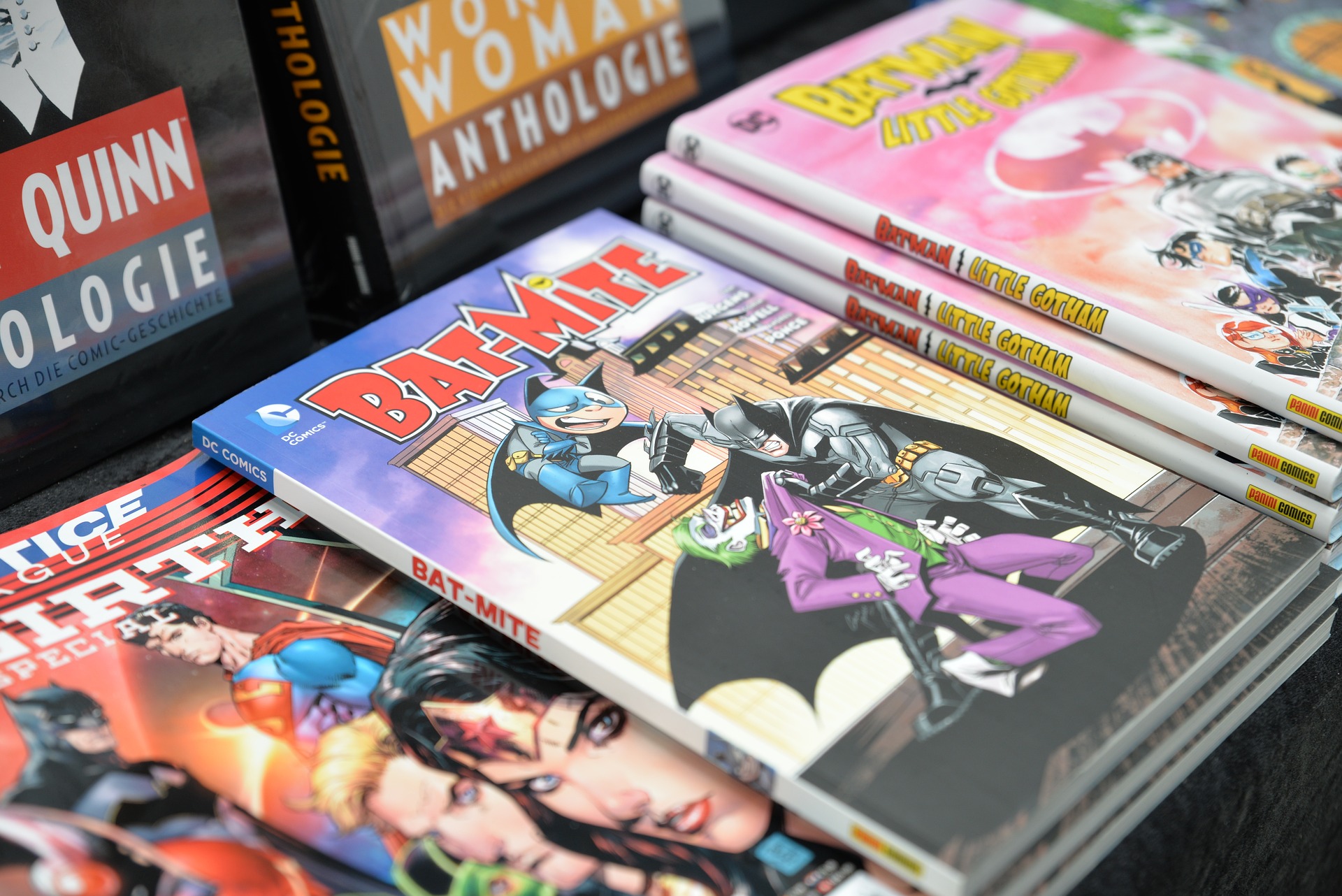
Everybody knows the Superman logo. Everybody can recognise the symbols of Batman or Spider-Man. But it’s not only the icons that are instantly recognisable. People also know what these symbols mean; they know what they stand for. Superman is the great hero, the epitome of good, the power of a god in the form of a mere human. Batman is the caped crusader, the manifestation of vengeance, the personification of street-level, vigilante justice. Spider-Man is explained succinctly in the iconic: ‘with great power comes great responsibility’. Every time someone sees their symbol, all these thematic or moral motifs are brought to mind.
As such, it is safe to say that superheroes are brands in human form. They are, in a fictional figure, everything that a brand strives to achieve: immediate recognition, lasting impact, clear and memorable values and aims, symbolism that adapts and yet remains iconic, longevity, relevancy across cultures and geographic boundaries, and so much more. Apart from appeasing the comic book nerds out there (and they are content to be known as such!), we should realise that comic books are not just a child’s fantasy in bright colours, or books for people who don’t like words, but that they can be invaluable teachers in branding and design. Somehow, comic book illustrators achieve, regularly, what designers and marketers attempt every day. So, here are five things comic books can teach us about branding.
‘And so, a legend is born…’
- Spider-Man, Amazing Fantasy #15, August 1962
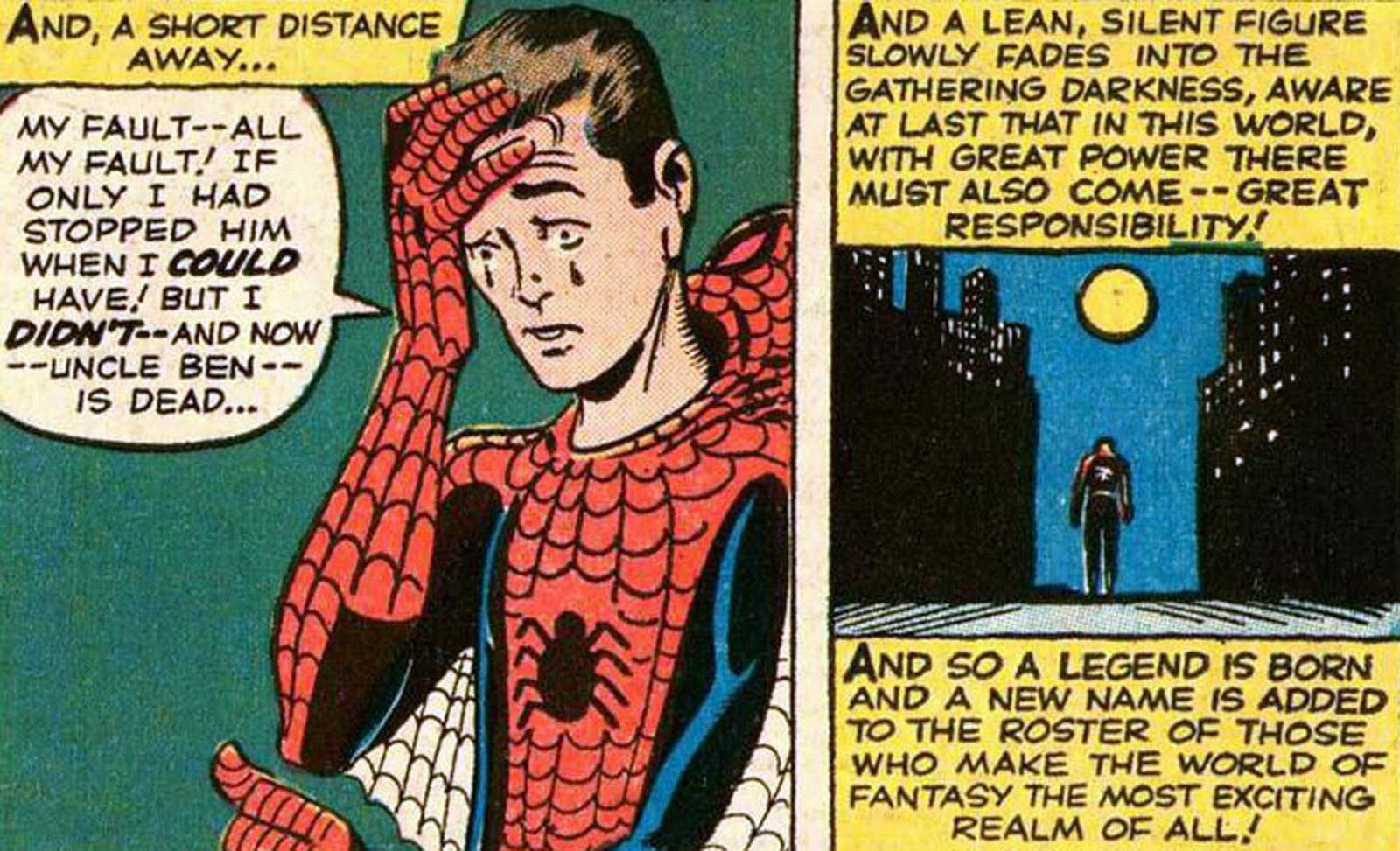
What is your origin story? Where did you come from? For Superman, it was the destruction of his home world of Krypton; for Batman it was the murder of his parents; for Spider-Man it was the death of his uncle. These were fundamental aspects that formed and constructed the heroes they would later become. They would also feature as key elements of their characters and motivations. Superman needed to adjust to life as a human while having the power of a Kryptonian; Batman needed to learn how to channel his grief, lust for revenge and anger into something productive and ultimately good; Spider-Man needed to overcome his own self-doubt, traverse the highs and lows of loss, newfound power and fresh responsibility. These were the origins of some of the most iconic superheroes ever created. This is also lesson number one: Tell your brand’s origin story.
If you are able to tell your backstory with honesty, heart and integrity, customers can connect to it. People relate to real, human stories. While they might like using your products or services, they are more likely to build greater brand loyalty if they feel they can relate to you and your brand’s story. Humans connect with, and relate to, humans, not faceless, emotionless symbols; humans are naturally bound to stories and storytelling. This is a powerful tool that you can leverage for greater customer engagement and brand loyalty.
‘Life doesn't give us purpose. We give life purpose.’
- The Flash, Blackest Night #8, 2019
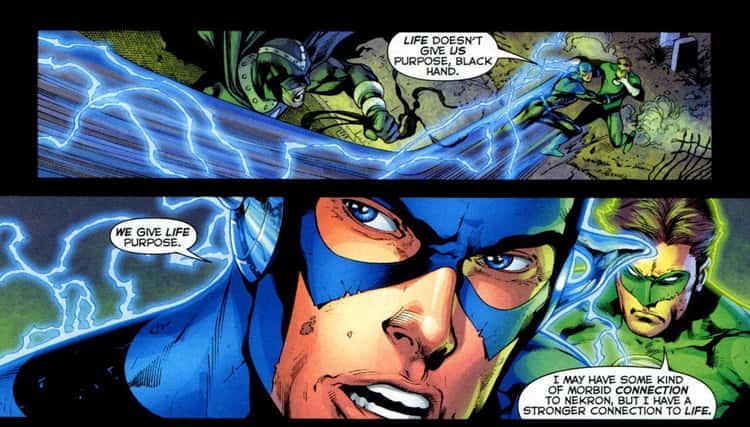
Each superhero is imbued with his or her own purposes and motivations. Superman’s is the protection of all people and the creation of a better future, his motto is: ‘Truth, Justice and a Better Tomorrow’; Batman’s life goal is for justice, protecting Gotham, striking fear into the hearts of all criminals and making sure no one has to experience the kind of loss or pain he suffered as a child; Spider-Man’s is to protect the people of New York from crime and to embody the truth of the mantra, ‘with great power comes great responsibility’. In the construction of these characters, we find lesson number two: Have a clear and present purpose.
Your brand’s ultimate goal and purpose will shape everything you do. It will feed into every decision making process, it will inform all ideas and directions, it will become the backbone of your company. It should be a purpose that transcends the waves of business and daily life. It should be a purpose that remains your core goal no matter how the stock markets, customer engagement or sales are going. You cannot compromise on your brand’s purpose or values. It is what sets you apart, it makes you unique, it makes you rock-solid. Find your purpose, stand on it and never drift.
‘As a man, I'm flesh and blood, I can be ignored, I can be destroyed; but as a symbol... I can be incorruptible, I can be everlasting.’
- Bruce Wayne, Batman Begins, 2005
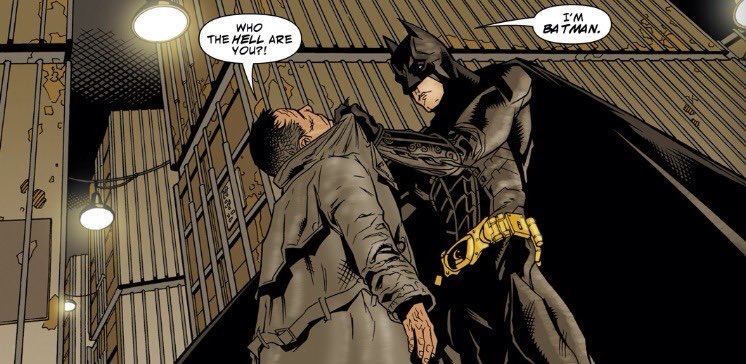
Superman has the ’S’, Batman the bat and Spider-Man the spider. These are the icons, the symbols that make the heroes instantly recognisable. Lesson number three: A good logo is vital.
What is your symbol? What icon represents your brand? This will be your logo. The importance of good logo design cannot be understated. It needs to transcend brand recognition and become an icon for your customers; it needs to be something the public immediately associate with who you are and what you stand for.
This is a key part of a superhero’s symbol: it represents all they stand for, as well as being an icon for themselves. When the Bat signal lights up Gotham’s night sky, the residents know help is on the way, and the criminals know to run and hide. Your logo has to be instantly recognisable, unique, and has to best-represent your company and its values.
‘When the mob and the press and the whole world tell you to move, your job is to plant yourself like a tree beside the river of truth, and tell the whole world, 'No, YOU Move.’’
- Captain America, Amazing Spider-Man (Vol. 1) #537, 2006
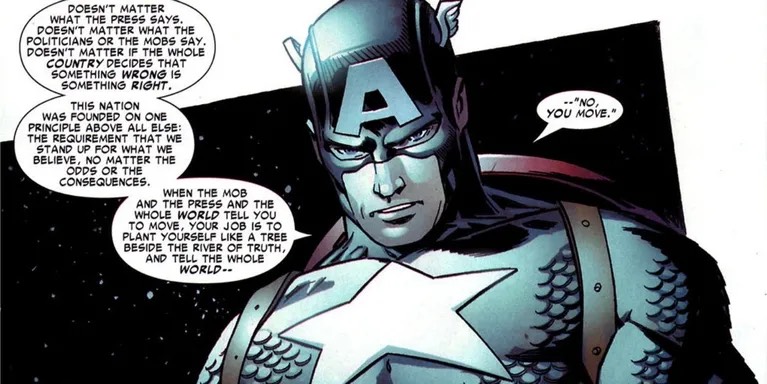
Captain America has been saying the same thing for almost 80 years. He has always stood as the flag bearer of democracy, freedom and good since his inception during the Second World War. His message has become a fundamental part of who he is, his character, his nature, his motivations. Here’s lesson number four: Have a consistent message.
Once you have laid out your brand’s purpose and created a logo that best represents this, you have to stay on-message. This needs to go across every area of your branding, products and customer engagement. Every time a customer comes into contact with you, they should know exactly the message they are going to hear. If they start hearing one message from one product, another message on a social media post, a different message on your website and a left-field message from your employees, the customers will be left confused and will, most likely, step away from your brand.
That was what made Captain America’s character arc in the Secret Empire (2017) run so shocking. Suddenly, Captain America was the exact opposite of all he stood for: he was a figurehead of Hydra, a warrior for tyranny and oppression. While this was fun for a 10-issue comic book series, you cannot afford to do this with your brand. Customers need to know and connect with your message, and so, it needs to be consistent everywhere you are.
‘Stagnation. A safer, more terrible form of death.’
- Wolverine, Wolverine By Claremont & Miller, 2009
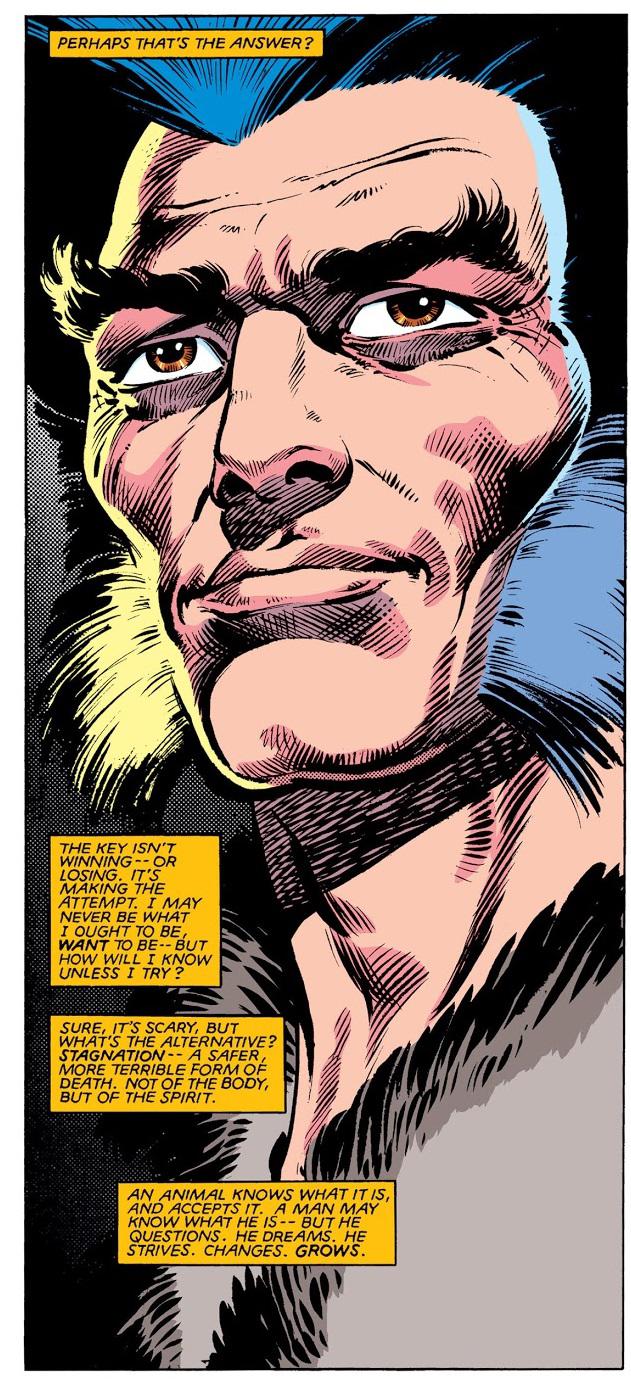
What has made the most iconic superheroes last for fifty, sixty, seventy years since their inception? What has enabled them to survive for so long? Our final lesson: Be adaptable.
Don’t worry, this is not a contradiction of our previous points about purpose, symbolism and consistent messaging. Instead, it builds on these features. Your purpose and values should stay the same. Superman’s goal has never changed; Gotham still needs protecting; Great power still comes with great responsibility. Truth doesn’t change, how you communicate it does. While the superheroes’ costumes, armour, cars, villains and sidekicks might change throughout the years, their core elements remain the same. This is what has enabled them to last so long.
In a business sense, employees might change, your products might progress, your audience demographics might age and evolve, but your core messaging should remain the same. You should be able to adapt your brand to best engage the current generation, culture or business landscape, but you should never compromise on your values.
Teachers are everywhere, we just need to find them. As such, let’s learn from the long tradition of character development, brand creation and marketing nous that comic book creators have cultivated over the years.
[MISSING TRANSLATION]
Saturating 2024 with Good Books: Reading Challenge ‘24
This year I’m undertaking a reading challenge. I did this last year and it was a fun opportunity to keep myself accountable in my reading habits, and to stretch the boundaries of what I would normally read. The challenge is to complete twelve books of…
[MISSING TRANSLATION]