
Why Church Buildings Still Matter in Britain

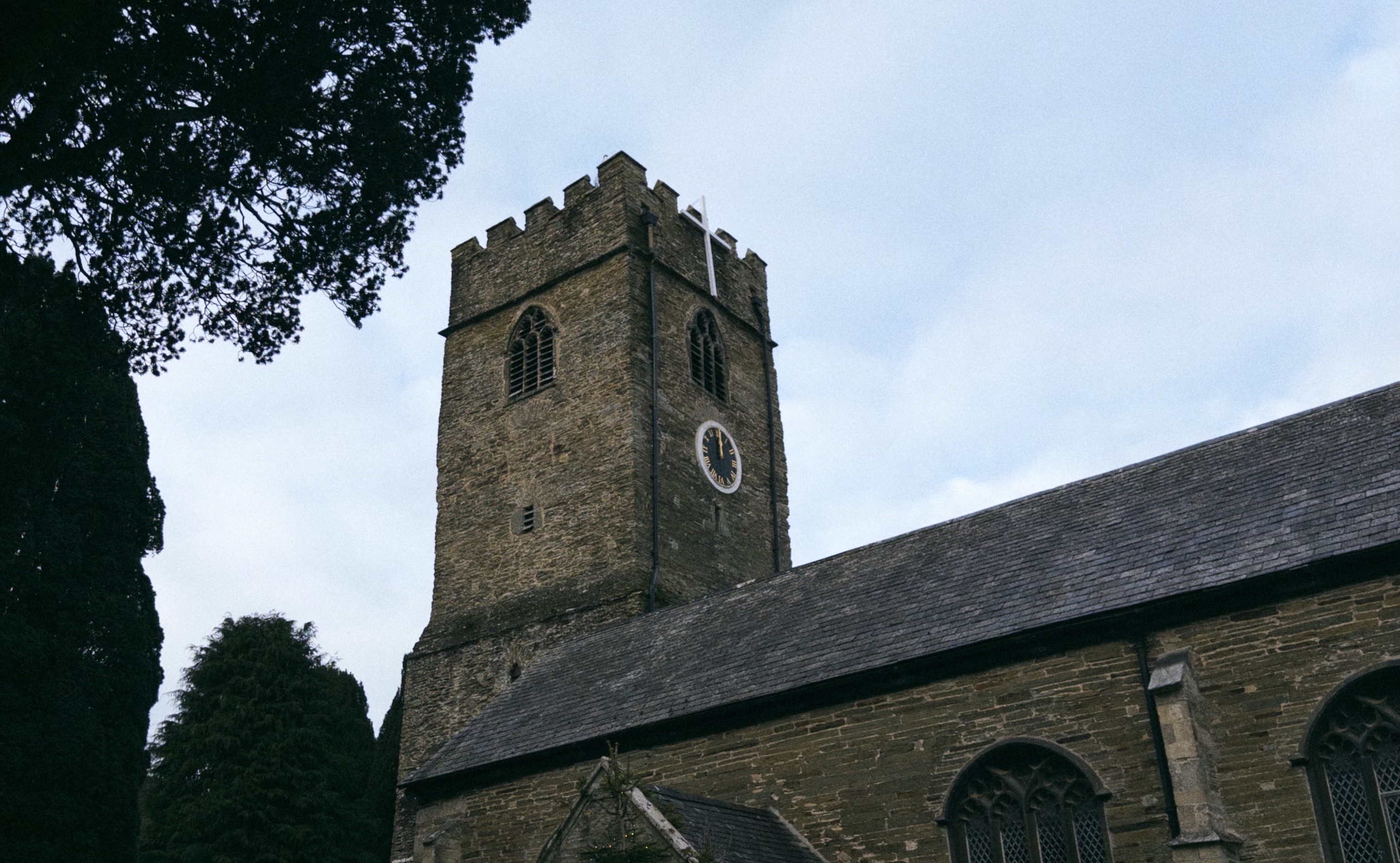
Walk through almost any English town or village and, sooner or later, the eye is drawn upward. Rising above the tiled roofs, chimneys, and aerials there stands a tower or a slender spire, often weathered by centuries of wind and rain. It may not be the tallest structure in modern terms. A mobile mast may exceed it in height, and a block of flats may overshadow it physically. Yet the church still commands the landscape in a way that newer buildings rarely do. The reason is simple: church buildings were never designed merely to dominate space. They were designed to dominate imagination.
Across Britain, church buildings function as far more than venues for religious gatherings. They are monuments, repositories of memory, places of refuge, and architectural expressions of belief. Above all, they are public statements about the civilisation that built them. Each tower and spire represents Christianity planted visibly into the soil of the nation, a kind of flag in the ground announcing that the community beneath it once believed itself to live under the authority of God. To understand Britain properly, its history, its psychology, and its cultural instincts, one must first understand the role played by its churches.
The Medieval Town Planner (Who Was Usually a Bishop)
In medieval England, the church building was not simply part of village life; it was its centre. Long before local councils, community centres, and parish halls existed, the church and its surrounding churchyard functioned as the heart of communal life. Markets were frequently held nearby, public announcements were read at the church door, and festivals were organised around the liturgical calendar. Even the rhythm of ordinary days was marked by the ringing of church bells, which called people to prayer, marked the hours of work, and announced events of joy or mourning.
The historian Eamon Duffy has described late medieval religion in England as a shared cultural system that bound communities together. As he writes in The Stripping of the Altars, religion was not merely a private belief but a public framework through which society understood itself.¹ The parish church embodied this framework physically. It was the building in which births were celebrated, marriages solemnised, and the dead commended to God. Generations passed through its doors, leaving their stories etched into memorials, plaques, and gravestones.
The sheer scale of medieval investment in church construction remains remarkable even today. England still possesses around 16,000 parish churches, many of which have stood for centuries.² The National Churches Trust estimates that roughly 12,500 of these are listed historic buildings, while the Church is responsible for nearly 45 percent of all Grade I listed buildings in England.³ These figures alone illustrate how deeply church architecture shaped the built environment of the nation.
What makes this particularly striking is the contrast between the durability of the church and the fragility of the houses surrounding it. The average medieval labourer lived in a dwelling constructed of timber, clay, and thatch, materials that might last only a generation. Yet the church he helped build was constructed from stone, designed to endure for centuries. In this sense, medieval communities built their homes for themselves but their churches for their descendants.
A Flag Planted in the Soil
Church buildings are not only practical structures; they are symbolic ones. A church tower rising above the surrounding landscape acts almost like a civilisational marker. It communicates something about the moral and spiritual order of the place in which it stands.
The English essayist G. K. Chesterton captured this instinct with characteristic clarity when he observed that a church is not merely a meeting-house but a monument.⁴ Even when empty, a church building continues to speak. It reminds the community that earlier generations believed God mattered more than commerce, that eternity mattered more than convenience, and that the life of the soul deserved a central place in public life.
In this sense, the parish church functions as a cultural landmark. It does not mark territory in a military sense, but it marks a moral landscape. The tower signals that Christianity once shaped the habits, laws, and expectations of the society beneath it. The spire is therefore not merely decorative. It is theological. It points upward, quite deliberately, as a visual reminder that human life is meant to be oriented toward something beyond itself.
The Original Sanctuary
Churches have also historically served as places of refuge. In medieval England the legal concept of sanctuary allowed fugitives to seek protection within church buildings. Once inside the sacred precinct, they could not immediately be removed by force and were granted a period in which their case could be considered.⁵
This practice reflected a deeply rooted belief that certain spaces were holy and therefore protected. The church building represented a zone where violence was restrained and mercy could intervene. Even when the law pursued someone relentlessly, the church offered a moment of pause.
Although the legal system of sanctuary eventually disappeared, the instinct behind it remains surprisingly persistent. In moments of national tragedy or local grief, people still gather instinctively in churches. When disasters occur, whether acts of violence, accidents, or the death of a public figure, church doors open, candles appear, and silence fills the building. Many of those who attend such vigils may not regularly participate in church life, yet they recognise instinctively that the church is the appropriate place for communal mourning.
Modern society often speaks of 'safe spaces,' but the original safe space was the parish church, not because it pandered to culture's felt-needs or artificial issues, but because it offered something the world outside could not: true protection from harm through the ministry of Word and Sacrament.
Social Capital in Stone
Modern sociology has begun to recognise something that earlier generations simply assumed: institutions shape communities. The political scientist Robert Putnam, in his influential work Bowling Alone, describes how institutions such as churches generate what he calls “social capital”, the networks of trust, cooperation, and shared identity that allow societies to function well.⁶
The church building provides a physical setting for these networks to flourish. It hosts weddings, funerals, charity events, concerts, youth groups, and remembrance services. In many rural areas, particularly where pubs, shops, and post offices have closed, the parish church remains the last surviving communal institution. It continues to provide a space where neighbours encounter one another and where collective memory is preserved.
When such a building disappears or falls into disuse, something subtle but significant is lost. A community without a central meeting place gradually loses its shared identity. Individuals continue to live side by side, but the social fabric that binds them together weakens.
The Psychology of Sacred Architecture
Human beings are deeply influenced by the spaces they inhabit. Architects and psychologists alike recognise that certain environments evoke particular emotional responses. Sacred architecture is intentionally designed to produce a sense of reverence and awe.
The architectural features common to many English churches: high ceilings, vertical lines, filtered light through stained glass, and echoing acoustics, combine to create a powerful emotional atmosphere. These elements encourage quiet reflection and remind visitors of their own smallness within a larger reality.
Even individuals who do not consider themselves religious often react instinctively to such spaces. Voices lower, movements slow, and attention becomes more focused. The building itself quietly teaches a kind of theology by shaping the emotional experience of those who enter it.
A society that builds nothing but offices and shopping centres should not be surprised if its citizens begin to think primarily in terms of commerce and productivity. A society that builds churches reminds its people that they are more than economic units; they are souls.
Beauty as a Public Good
Church buildings also represent one of Britain’s greatest aesthetic achievements. For centuries the most ambitious architectural projects in the country were cathedrals and parish churches. Gothic arches, Norman towers, and medieval stonework transformed landscapes across the country.
The Victorian critic John Ruskin famously argued that architecture reflects the moral health of a civilisation.⁷ If this observation is correct, then medieval England possessed remarkable cultural confidence. The construction of cathedrals often took decades or even centuries, requiring extraordinary financial commitment and technical skill.
Modern building projects rarely operate on such timescales. Developers seek efficiency and quick returns on investment. Medieval builders, by contrast, thought in terms of generations. Their aim was not merely to complete a structure but to create something worthy of standing for centuries.
The result is that many church buildings still dominate the visual character of the English countryside today. Their towers remain landmarks visible for miles across fields and valleys, reminders of a period when communities invested their greatest artistic and financial resources in places of worship.
Living Buildings, Not Museum Pieces
It is increasingly common in modern Britain to regard churches primarily as heritage sites. Tourists admire them, preservation societies catalogue them, and historians document their architectural features.
Yet such an approach risks misunderstanding their true purpose. A church building is not merely a museum piece. It is meant to be a living sign.
When a church remains active, when prayers are offered, hymns are sung, and congregations gather, the building continues to function as a public declaration of faith. Its presence communicates that worship still occupies a place within the life of the community.
When worship ceases, however, the building’s meaning subtly changes. It becomes an artefact of history rather than an expression of living belief. The stones remain, but their message grows quieter.
This is why the survival of living churches must be a priority in the preservation of all the empty buildings.
Britain’s Stone Memory
Across England there remain thousands upon thousands of church buildings belonging to a wide range of Christian traditions: Anglican, Catholic, Methodist, Baptist, and many others. Together they form one of the most extensive collections of sacred architecture in the world.
Yet their importance cannot be measured merely in architectural terms. Each church acts as a kind of memory for the nation. It reminds passers-by that earlier generations organised their lives around beliefs which modern society sometimes forgets: that God exists, that human life possesses eternal significance, and that communities flourish when they gather around something greater than themselves.
These convictions are not preserved solely in books or archives. They are carved into stone walls, etched into stained glass, and engraved into the gravestones that surround so many parish churches.
Stone has a remarkable ability to preserve memory. It resists the forgetfulness that often accompanies cultural change.
A Reason for Hope
It has become fashionable to describe Christianity in Britain as a relic of the past. In many respects, church attendance has declined and religious influence has weakened in public life. Yet the physical landscape itself quietly contradicts the idea that Christianity has simply disappeared.
Those thousands of church buildings scattered across the country are not merely reminders of what once existed. They are foundations upon which something could exist again. Civilisations rarely abandon their deepest traditions permanently. Cultural memory tends to reassert itself in unexpected ways.
Christianity transformed Britain once before. It did so slowly, through monasteries, parish churches, and small communities of believers whose influence gradually reshaped the moral imagination of the nation. The same institutions that carried the faith through centuries of upheaval still stand today.
This persistence offers grounds for hope. Christian history has often moved in cycles of decline and renewal, and the presence of these enduring buildings serves as a reminder that the story is not yet finished. The towers remain, the bells still hang in their belfries, and the architecture of faith continues to shape the landscape.
Perhaps the most remarkable thing about a church spire is the direction in which it points. Even after centuries of storms and cultural change, it still points upward.
References:
- Eamon Duffy, The Stripping of the Altars (Yale University Press, 1992).
- Church of England statistics on parish churches.
- National Churches Trust, UK church building statistics.
- G. K. Chesterton, The Everlasting Man (1925).
- J. H. Baker, An Introduction to English Legal History (Oxford University Press).
- Robert Putnam, Bowling Alone (Simon & Schuster, 2000).
- John Ruskin, The Seven Lamps of Architecture (1849).